 Share
Share Facebook
 Linkedin
 Twitter
 Print
PrintResults and future prospects of the project SUS-MIRRI.IT
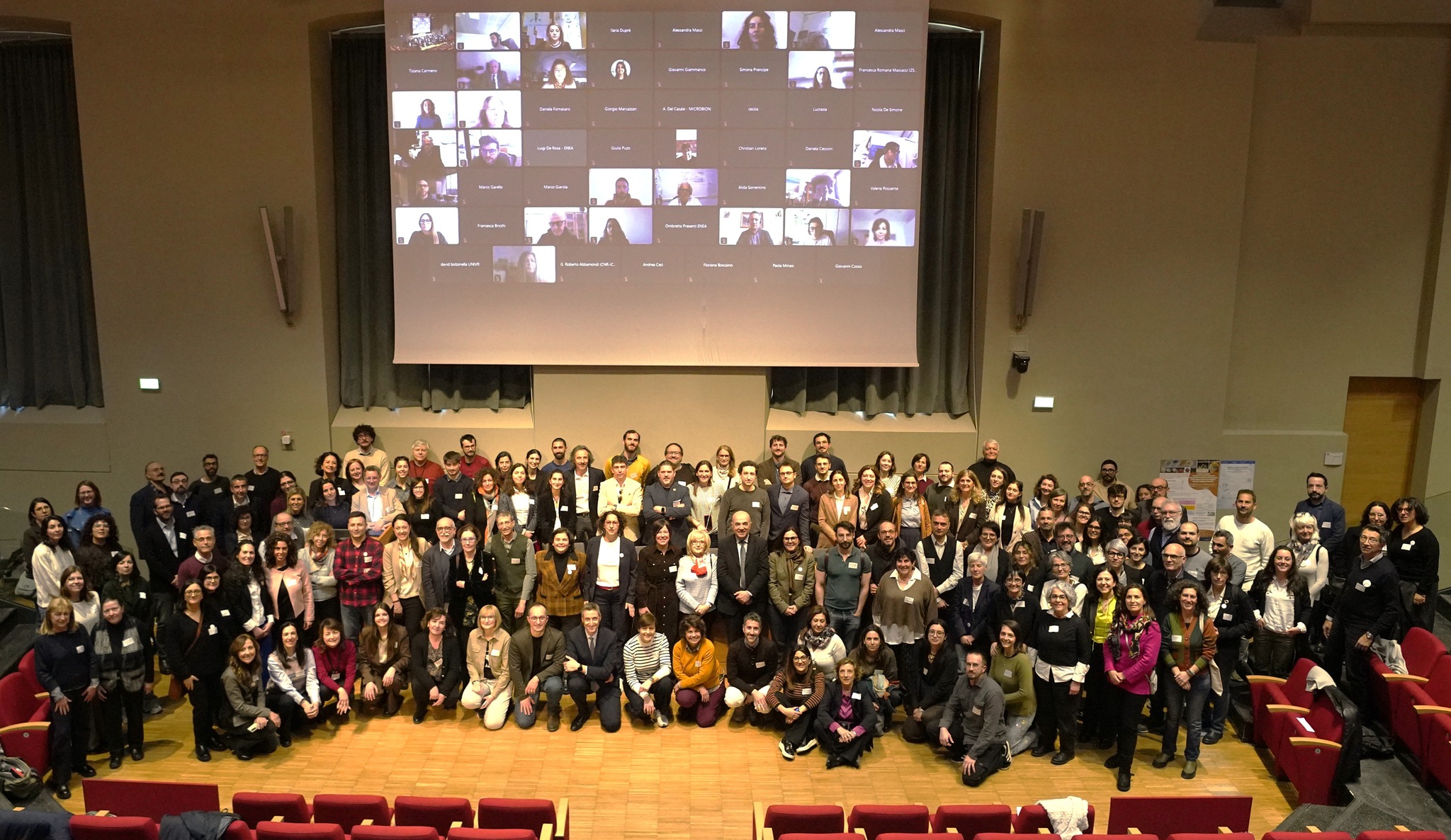
On 19 March 2026, the final meeting of the SUS-MIRRI.IT project (Strengthening the MIRRI-IT Research Infrastructure for Sustainable Bioscience and Bioeconomy) took place in the Aula Magna della Cavallerizza Reale at the University of Turin. During the event, the results and future prospects of a project that, with an allocated budget of approximately €17 million, has created and strengthened Italy’s largest ecosystem of microbial biobanks (MIRRI-IT), were presented.
MIRRI-IT, the Italian node of the European MIRRI-ERIC infrastructure, coordinates the country’s main microbial collections and has developed the most comprehensive national catalogue of microbial resources, which includes bacteria, filamentous fungi, yeasts, microalgae and plant viruses. The infrastructure enables universities, research centres and companies to access microbial resources and advanced scientific services for the development of biotechnological applications across numerous sectors.
The event on 19 March was attended by a number of dignitaries, including Cristina Prandi, Rector of the University of Turin; Giovanni Amateis, Head of the University System, Right to Education, Research and Innovation Department at the Piemonte Regional Government; Lorenza Patriarca, Councillor for the City of Turin; and Ana Portugal Melo, Executive Director of the European infrastructure MIRRI-ERIC.
Among the results presented during the meeting, we would like to mention over 43,000 microbial strains preserved and characterised, more than 150 advanced scientific services, and a national network involving 29 research institutions.
The project has also strengthened the national network of laboratories through the installation of 94 new scientific instruments and the development of 56 new microbial analysis services, dedicated to the genomic and phenotypic characterisation of microorganisms, the study of microbiomes, bioinformatics and the search for new applications in the environmental, health and agri-food sectors.
Key outcomes include the recruitment of over 50 researchers, technicians and PhD students, the organisation of 34 advanced training courses, and the implementation of 15 national and international access programmes to the network’s laboratories. The scientific activities have resulted in over 100 publications and numerous collaborations with the research and industrial sectors.
The day concluded with a round-table discussion focusing on the future prospects of the MIRRI-IT infrastructure following the end of PNRR funding, attended by representatives from the Ministry of Universities and Research, the National Biodiversity Future Centre, the European Enterprise Network, the national SPRING and CLAN clusters, and the 2i3t university incubator.
The discussion highlighted the strategic role of research infrastructure in strengthening collaboration between universities, companies and institutions and supporting the development of a bioeconomy based on microbial biodiversity.
Thanks to the results achieved, the MIRRI-IT infrastructure now represents not only a growth driver for the Italian biotechnology sector, but also a key strength of the European MIRRI-ERIC infrastructure, thanks to the microbial resources, specialist expertise and services made available to the scientific community and industry.
The aim is to continue creating synergies and ensure that PNRR investments continue to have a tangible impact in terms of innovation for business competitiveness and the development of the bioeconomy at national, European and global levels.